











(Surabaya, 22 Oct 2025) At a packed SAICoPPS session on resilience and multilateralism, five presenters traced how sovereignty and peacebuilding are being reshaped by three overlapping forces: gendered social leadership, control over digital systems, and citizen-led crisis responses. From UN Women’s work in Palestine to community-run Emergency Response Rooms in Sudan, the discussion made one thing clear – resilience is as much about people and rights as it is about technology and policy.
Women’s leadership as resilience architecture
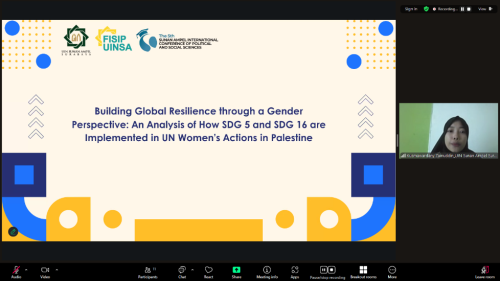
UN Women’s programs in Palestine were presented as a practical model for how gender equality (SDG 5) and peaceful, inclusive institutions (SDG 16) can directly strengthen community resilience. The presenter outlined how economic empowerment sits at the center of this approach: after repeated crises, nearly all women-owned small businesses in Gaza were forced to stop operating, underscoring how fragile livelihoods are to infrastructure damage and blockade. Yet local women’s organizations even when their offices were damaged or destroyed proved remarkably resilient, continuing services and community coordination.
QR codes, payment rails and digital sovereignty
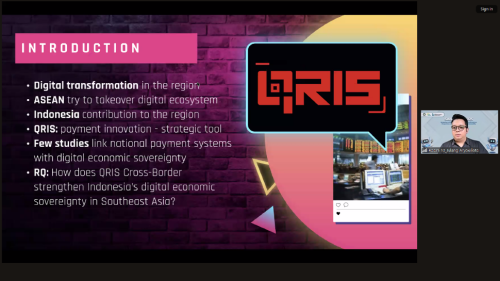
Indonesia’s QRIS Cross-Border payments program drew attention as an unexpected lever of geopolitical influence. The presenter argued that national payment systems are not just conveniences they are instruments of economic sovereignty that reduce dependence on global card networks, support MSMEs and tourism, and function as tools of regional diplomacy. Early cross-border volumes (noted in Thailand, Malaysia and Singapore) suggest rapid uptake that may shift regional payment patterns and with them, who controls data, standards and revenue.
Migration, gender and policy failure by design
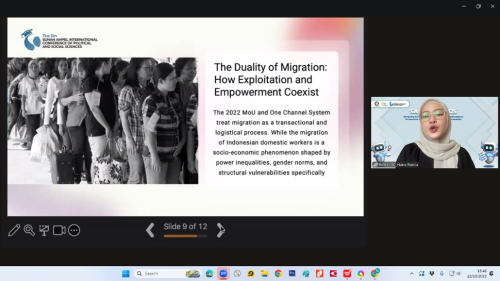
The session’s migration paper reframed “feminization of migration” as a structural, gendered phenomenon not only higher numbers of women migrating, but a pattern that channels women into undervalued domestic work and increases exposure to exploitation. The 2022 Indonesia-Malaysia MoU and the One Channel System were criticized as transactional and gender-blind: while the mechanisms streamline placement logistics, they do not address the socio-economic drivers or provide sufficient labor protections. The presenter urged migration diplomacy that foregrounds rights and long-term protection over mere efficiency.
5G as the new geopolitical battleground
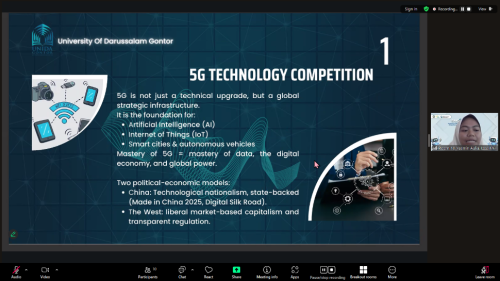
Technology’s geopolitical role came into sharp focus with a presentation on the contest over 5G infrastructure. 5G was framed not as a simple upgrade but as the physical foundation for future systems AI, IoT, smart cities and therefore as a strategic asset. The speaker traced how China’s state-backed deployment model (exemplified by Huawei) competes with Western security-oriented responses (e.g., “clean network” efforts), pointing to the risk of global internet fragmentation. For developing states, the dilemma is stark: rapid access to infrastructure versus long-term control over digital sovereignty.
Citizen power in crisis: Sudan’s Emergency Response Rooms
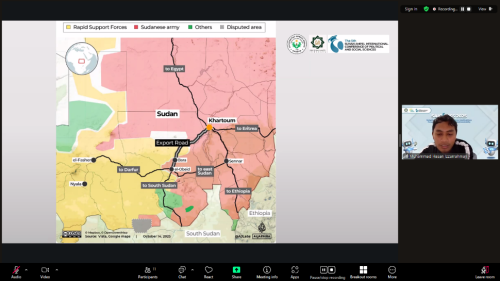
Perhaps the most visceral account came from Sudan, where Emergency Response Rooms (ERRs) have emerged as autonomous civic arenas after the collapse of many public services following the April 2023 conflict. Citizens mobilized by the Nafeer ethos and supported by diaspora remittances and zakat organized evacuations, community kitchens and pop-up clinics. These acts of citizenship transformed passive victims into active responders and demonstrate how horizontal solidarity can become a core element of survival and social order in failed-state scenarios.
Tying threads: what resilient multilateralism must do
Across the presentations, several clear prescriptions emerged:
- Mainstream gender in resilience programming women’s economic agency and political participation are central to recovery.
- Treat digital systems as sovereign infrastructure payment rails and telecom networks must be governed to protect data, access and fair benefits.
- Reform migration governance to be rights-based and gender-sensitive, not only transactional.
- Recognize and fund civic initiatives informal networks like ERRs should be partners in humanitarian and peacebuilding strategies, not afterthoughts.
The SAICoPPS session underscored a simple but powerful recalibration: resilience is not merely the restoration of systems, but the empowerment of people who inhabit them. When women, data governance, migration policy and civic ingenuity are woven together in policy and practice, nations stand a better chance of preserving sovereignty and building sustainable peace. (MAH)
Untuk informasi lebih lanjut mengenai kegiatan dan program FISIP UINSA, silakan kunjungi dan ikuti media sosial kami di Instagram