










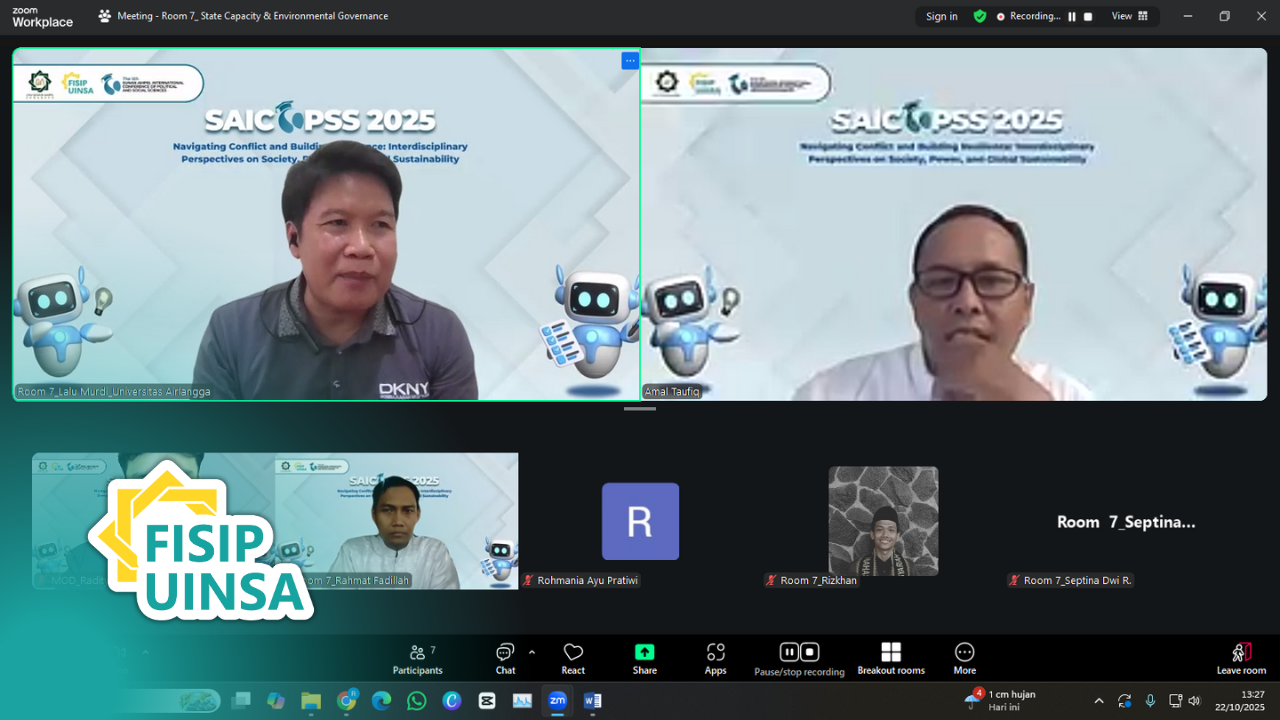
(Surabaya, 22 Oct 2025) – The Sunan Ampel Surabaya International Conference of Political and Social Sciences (SAICoPSS) highlighted the arenas of humanitarian struggle that are often overlooked by the public.
STUDY OF INEQUALITY IN ACCESS TO FISHERY RESOURCES AMONG FISHING COMMUNITIES
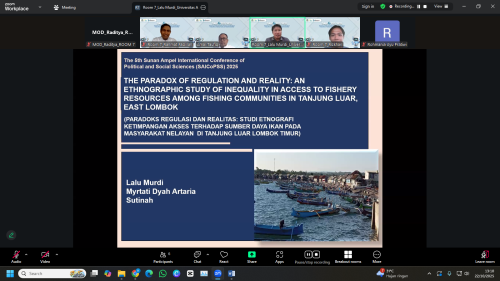
Indonesia faces complex environmental challenges, marked by conflicts over resources and an increase in urban waste. In the maritime sector, the main issue is unequal access to fish resources, which triggers conflicts between fishermen, particularly in Tanjung Luar, East Lombok. Since the 1970s, conflicts have often occurred between traditional fishermen and modern fishermen,ethnics and people who use fishing gear such as Kerakat Mini and Rumpon (Fish Aggregating Devices/FADs).
These conflicts are driven by several factors like Competition for Fishing Grounds Although there are government policies and local regulations that limit the operating areas of modern fishermen for example, Kerakat Mini are prohibited from operating within 3 miles of the coast, in practice, violations often occur.
Impact of Modern Fishing Gear: Rumpon and Kerakat Mini are considered to cause the migration of major commercial fish species (such as skipjack and tuna) to the open sea and deplete fish stocks in coastal areas. Small-scale fishermen complain that large vessels use purse seines around rumpon, which leads to overfishing.
Weakening Local Regulations: Customary regulations (awig-awig), which were once effective in regulating fishing areas, are now often violated and have no binding legal force, leading to ongoing social conflict.
Examining food security in Jokowi until Prabowo
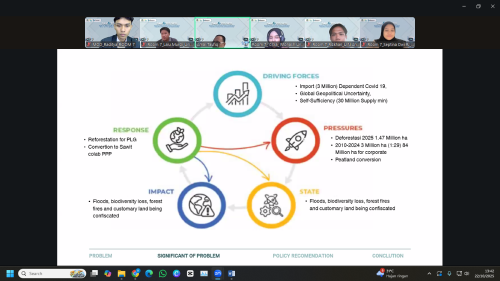
This discussion uses SDIPS analysis levels such as State, Pressures, Response, Impact, and Driving force. And because the world is multipolar, many policies are changing. 1:29 Forest stations in food estates are very dangerous because of corporations. And forests are often used for the benefit of the state. Forest stations are not being rehabilitated but are instead being turned into palm oil plantations because the state is working with companies for its own benefit.
Policy Alternatives : Expanding agricultural land through partnerships with private investors for large-scale cultivation projects, Bulog (the state logistics agency) purchases farmers’ crops at a low fixed price of around IDR 6,500/kg, which is only about half of the market price, land zoning for the national “Food Estate” program is not based on scientific or ecological assessments.
Alternative Policy : Focus on R&D and hybrid seeds through state-agro research partnerships. State purchase system for rice at fixed support price. Introduce Guaranteed Purchase Policy (60% buyback by Bulog) with fair pricing, uses land zoning to determine suitable crops in Mekong Delta and Develop Soil Mapping & Crop Matching Policy via agricultural universities
Policy Recommendations: R&D hybrid seeds,mapping and crop matching Policy via research partnerships, and 60% buyback by Bulog with fair pricing benefit for farmer
The food estate program has never taken off since its inception because the country has always focused on the free market. Political parties always benefit because they always work together with companies. This is because even the MSME System does not actually support the people but supports the free market because there is government intervention there. The ones who benefit the most from this are investors because after the regime change and the IMF entered, a free market was created, which has been very detrimental to small communities and farmers.
Innovation and Effectiveness of Environmental Governance Based on Ecological Justice
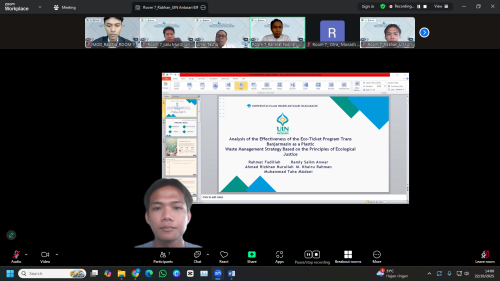
On the other hand, innovative efforts have emerged at the city level to address environmental issues, particularly waste management, by integrating the principles of sustainability and ecological justice. The city of Banjarmasin, which faces increasing waste production and plans to close the Basirih landfill in 2025, launched the EcoTicket Trans Banjarmasin program.
Innovation Model: This program allows the public to exchange used plastic bottles for free Trans Banjarmasin bus tickets.
Success and Effectiveness: In less than four months since its launch, the program has collected more than 60,523 plastic bottles, equivalent to nearly 200 kg of waste, and increased the use of public transportation. According to Budiani’s indicators, the program is considered effective because it is on target (targeting public transport users such as students and office workers) and most of its objectives have been achieved, although socialization and monitoring still need to be improved.
Ecological Justice: EcoTicket applies the values of ecological justice through pollution prevention, fairer distribution of environmental benefits (free access to transportation) to vulnerable groups, and increased ecological awareness in the community. This circular economy model is supported by cooperation with the City Waste Bank, where the proceeds from the sale of plastic waste become Local Own-Source Revenue (PAD) and support the sustainability of the program.
Institutional Synergy for Urban Climate Resilience
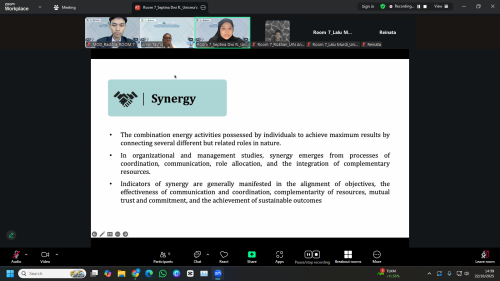
The challenges of climate change at the local level are addressed through the Climate Village Program (ProKlim), which relies on synergy between the Ministry of Environment and Forestry (KLHK) and the Regional Environment Agency (DLH) in the region.
Synergy Role: This synergy bridges national policies with local implementation strategies. The Ministry of Environment and Forestry provides policy frameworks, technical guidelines, and an award/registration system (SRN PPI), while the DLH plays a role in operational implementation, community development, and program adaptation according to the local context.
Pentahelix Model: Synergy in Malang, particularly in Gadingkasri, is realized through a pentahelix approach, which involves the government, community, academia, private sector, and media. This collaboration integrates unique resources (e.g., institutional knowledge and organizational culture of DLH) to achieve more effective results in climate adaptation and emission mitigation.
Green City Contribution: The success of the award-winning ProKlim Gadingkasri strengthens the Green City framework in Malang by promoting community-based environmental management, greening, and sustainable urban resilience.
So,in this discussion I think Indonesia faces major challenges in environmental management and resource conflicts that reflect the gap between central policies and local realities. In the marine sector, conflicts between traditional and modern fishermen, as well as the weakening of customary law, demonstrate how inconsistent policy enforcement triggers social tensions and unfair access to resources.On the other hand, programs based on ecological justice and innovation at the city level, such as EcoTicket Trans Banjarmasin and ProKlim Gadingkasri in Malang, prove that cross-sector collaboration (the pentahelix model), community involvement, and local approaches can produce effective and sustainable solutions. These successes demonstrate the importance of institutional synergy and ecological justice-based approaches in addressing climate change and urban environmental issues.
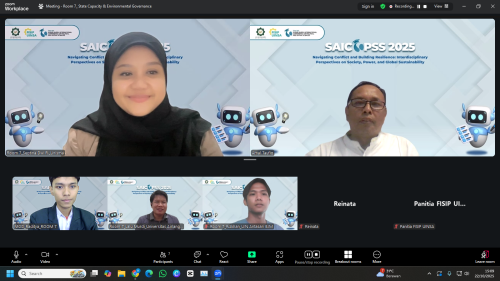
Meanwhile, national programs such as Food Estate have been criticized for favoring corporate and free market interests, while neglecting ecological studies and the interests of small farmers. This shows the need to reformulate national food policy with a focus on agricultural research, fair prices, and policies based on ecological and social data. (RNS)
Untuk informasi lebih lanjut mengenai kegiatan dan program FISIP UINSA, silakan kunjungi dan ikuti media sosial kami di Instagram.