










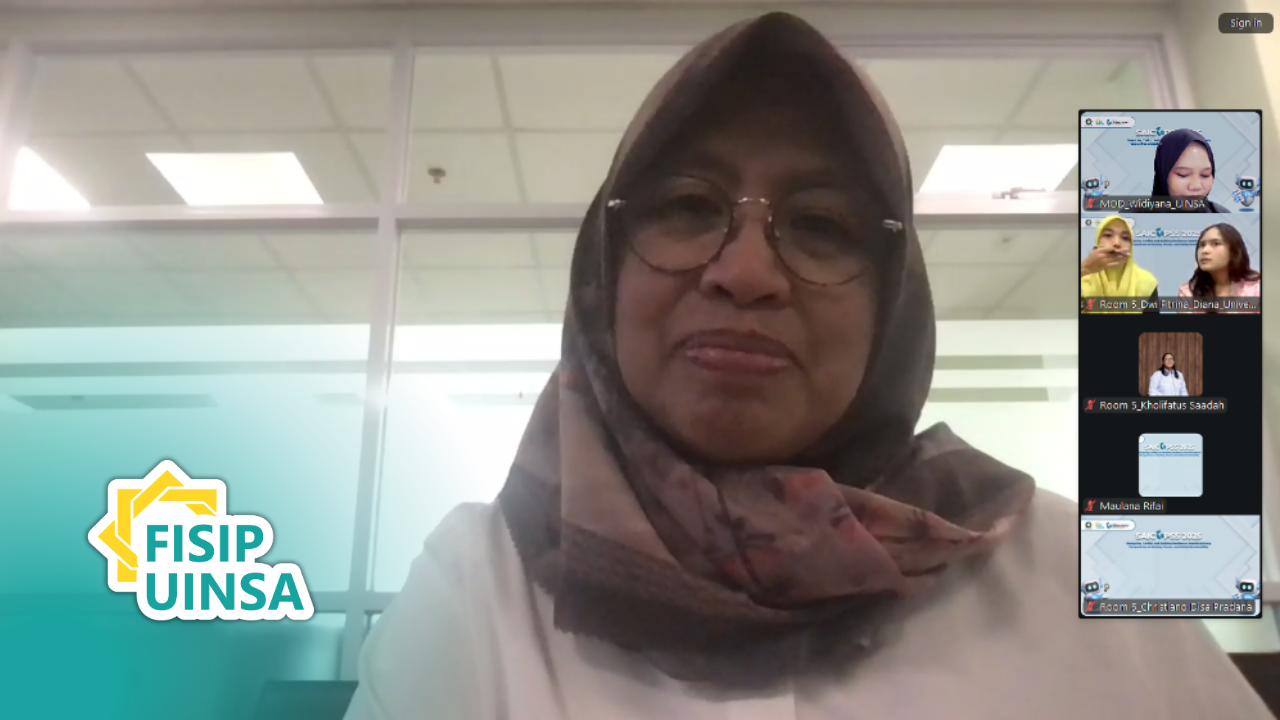
(Surabaya, 21 Oct 2025) At the 5th Sunan Ampel International Conference of Political and Social Sciences (SAICoPPS), experts and practitioners gathered under the theme “Community Adaptation in the Face of Environmental Disasters.” The session made one thing clear: disaster resilience starts with people. Communities, NGOs, Universities, Libraries, and local governments each bring vital skills and resources that, when combined, shift disaster management from reactive response to proactive preventions.
NGOs and human security: coordinated humanitarian action
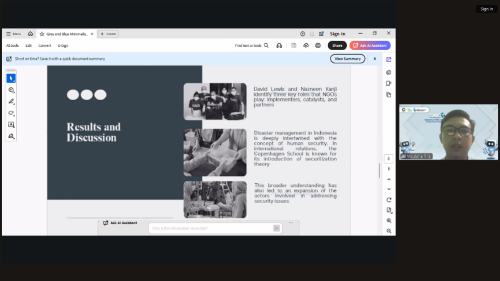
The first presentation examined how disaster management in Indonesia is deeply linked to the concept of human security. Presenters highlighted that NGOs from national groups like human initiative to partnerships such as MDRC working with the catholic relief service have repeatedly demonstrated rapid response capability and community protection in crisis. Referencing Law No. 24/2007 on disaster management, speaker emphasized that legal frameworks provide foundation for action, but it is the civil society actors who often deliver timely humanitarian support on the ground. BNPB data showing roughly 3,489 disaster events nationwide was used to underline the scale and urgency of the challenge.
Community-based disaster risk reduction: local leadership in action
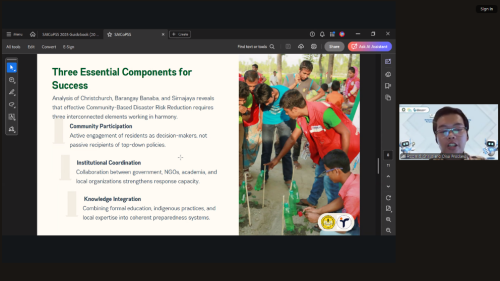
Another presenter focused on community-based disaster risk reduction, with case studies from Patakbanteng Village, Barangay Banaba, and Sinarjaya (West Java). These local initiatives demonstrated that preparedness works best when it is tailored to local needs: Barangay Banaba’s gender-sensitive, institutionalized preparedness; Patakbanteng’s local risk reduction measures; and Sinarjaya’s successful academic–community collaborations that brought research directly into practice. Speakers tied these lessons to the Sendai Framework a global policy that shifts the approach from post-disaster response to understanding risk, strengthening governance, investing in resilience, and improving preparedness.
Kampung Tangguh and integrated community resilience
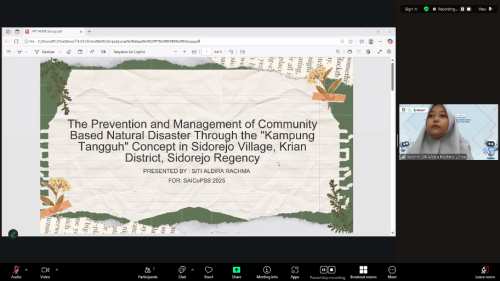
The Kampung Tangguh program in Sidoarjo was presented as a model of integrated resilience developed during the COVID-19 pandemic. Rather than focusing on a single sector, Kampung Tangguh links food security (rice planting and fish cultivation), health (family welfare programs run by PKK women’s groups), local economy (support for UMKM/small businesses), and education (youth programs run by Karang Taruna such as volleyball, martial arts training, and plastic recycling projects). This multi-sectoral approach showed how a village can strengthen daily-life resilience while preparing for larger environmental shocks.
Libraries: overlooked assets with untapped potential
The literature review on policy and regulatory frameworks for libraries revealed an important but often overlooked role: libraries can be safe, accessible community hubs before, during, and after disasters. Presenters noted three operational phases pre-disaster (minimizing future impact through education and preparedness), during disaster (providing crucial information and safe space), and post-disaster (helping restore services and damaged collections). However, a clear national policy for the National Library of Indonesia on disaster roles is currently missing, creating a policy gap but also a clear opportunity for collaboration in infrastructure, technology, and staff capacity-building.
Cross-cutting lessons and concrete recommendations
Across the four presentations, three core components of successful disaster resilience emerged: community participation, institutional coordination, and knowledge integration. Presenters referenced scholarship and practice (including work by scholars such as David Lewis and Nazneen Kanji) in pointing out the multiple roles NGOs play delivering humanitarian assistance, advocating for community needs, and bridging local knowledge with policy. The session concluded with a set of practical recommendations that can be acted on immediately:
-
- Extend disaster education to families (household preparedness, local curricula).
-
- Formalize informal networks so volunteer groups and local leaders can access support faster.
-
- Build university–community partnerships to translate research into local solutions.
-
- Harmonize governance across local and national levels to enable rapid, flexible funding and clear operational roles.
-
- Develop library disaster plans and invest in technology and training so libraries can support information continuity and community recovery.
Closing: a call to move from awareness to action
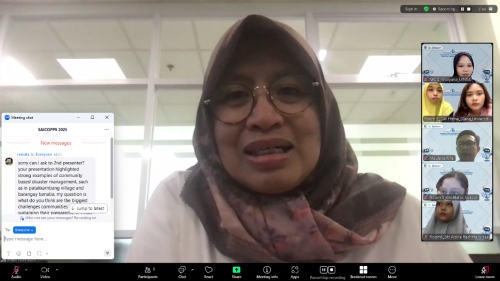
The key message was unanimous: resilience begins with empowered people and strong partnerships. Policies such as Law No. 24/2007 and global frameworks like Sendai provide direction, but measurable impact depends on turning policy into local practice. Panelists urged government agencies, donors, NGOs, universities, and community leaders to convert today’s recommendations into pilot programs, budgeting priorities, and formal partnerships, so communities are not merely surviving disasters but actively reducing risks and leading recovery. (WRA)
Untuk informasi lebih lanjut mengenai kegiatan dan program FISIP UINSA, silakan kunjungi dan ikuti media sosial kami di Instagram.